Good Vibe Gallery - Website for an Art Gallery
A Main Street gallery whose Square catalogue is now its online shop, with artist pages the founder writes herself
Top outcome
Live at goodvibegallery.com since November 4, 2026, selling art from the same Square stock as the counter.
Stack
Next.js 16 · React 19 · TypeScript · Square Catalog, Inventory and Payments APIs
Overview
Her Square is the shop
Pieces, photos, prices and stock come from her Square catalogue. A piece shows once she files it under Website art, with nothing copied by hand.
One stock count
The counter and the website sell from the same Square count. A purchase holds the piece for ten minutes while the buyer pays, so two online buyers cannot pay for the last one.
Card details stay with Square
Buy opens Square's payment form, so card numbers never reach the site, and each order arrives in her Square as a website order with pickup, delivery or shipping.
She runs the artist pages
A Google sign-in editor for artists, events and pages. She added the gallery's artists herself before launch.
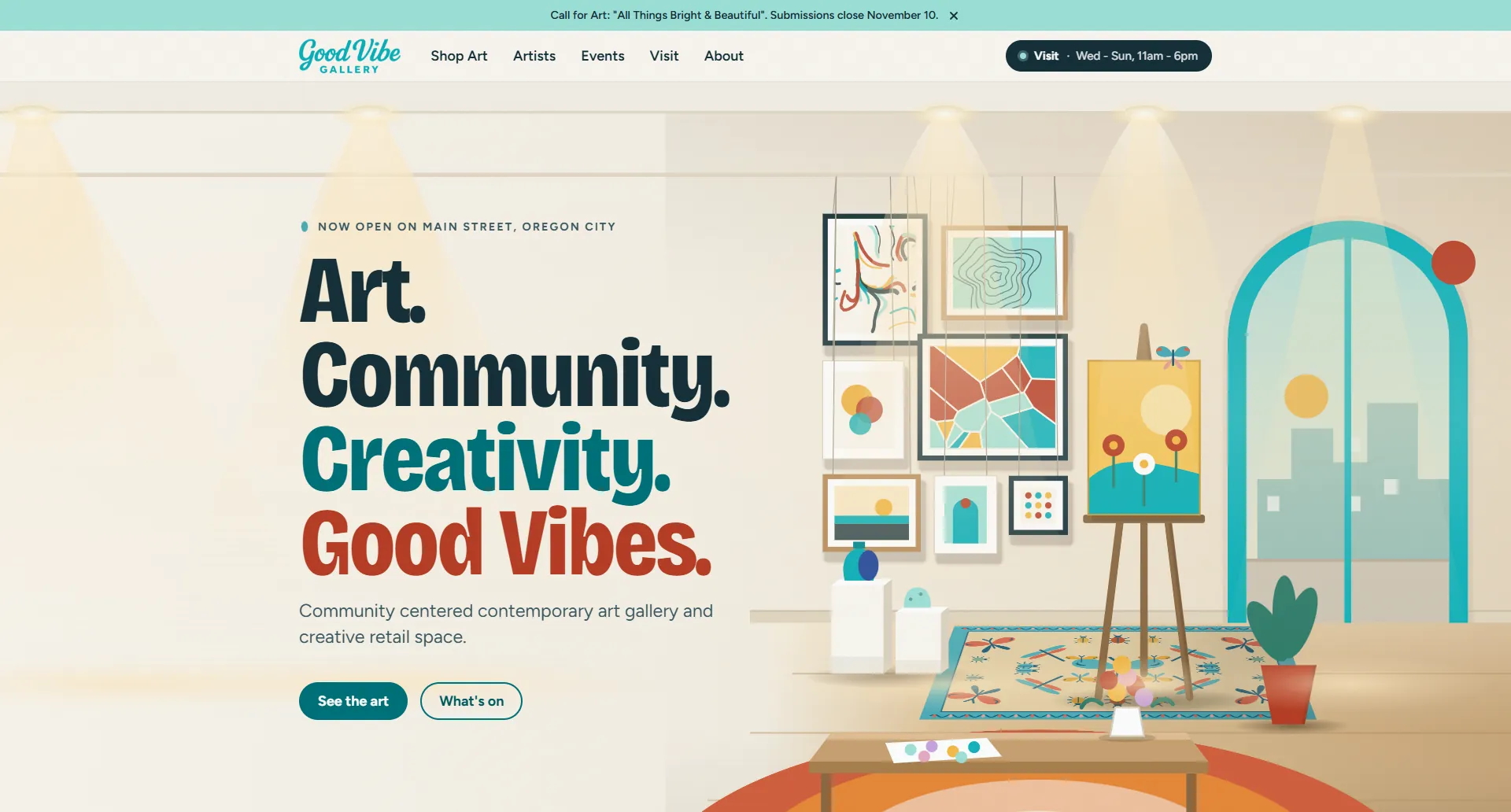
A website designed and built through my independent practice for Good Vibe Gallery, a community art gallery and creative retail space on Main Street in Oregon City founded by Stephanie Decker. It replaced a placeholder Wix page. The site reads the gallery's Square catalogue: she puts a piece in a Square category named Website art, and it appears on Shop Art with its photos, price and stock, filterable by artist and price. Buy opens Square's payment form and the order lands in her Square beside the counter sales, with each piece held while a buyer pays so two online buyers cannot pay for the same last piece. She added the gallery's artist pages herself through a Google sign-in editor, and the home page carries the room, the hours, the week's workshops and the current call for art. It went live on November 4, 2026.
The Problem
Good Vibe Gallery opened on Main Street in Oregon City in October 2026 with a placeholder Wix page. The founder, Stephanie Decker, already rang up the art at the counter with Square, and the gallery shows work from dozens of local artists, runs workshops and puts out calls for art. None of that was online, and keeping a second copy of every piece and price in a website would never stay true.
The Solution
Built a custom site that reads the gallery's Square catalogue instead of copying it. She decides what goes online inside Square itself, by putting a piece in a category named Website art, and the site takes its photos, price and stock from there. Visitors browse a wall of pieces by artist and price, and Buy opens Square's own payment form, so the order lands in her Square beside the counter sales. She added the artist pages herself through a sign-in editor, and the home page carries the gallery's room, its hours, the week's workshops and the current call for art.
Impact
- 1Live at goodvibegallery.com since November 4, 2026, replacing a placeholder Wix page
- 229 pieces on Shop Art read straight from her Square on launch day, with more appearing as she files them
- 355 artist pages on launch day, most of them added by her through the editor
- 4Workshops, openings and the gallery's call for art on the home page, with past events stepping down by themselves
Key Decisions
- Read the catalogue from Square rather than keep a second copy: Square stays the one place she edits a piece, a price or a count
- She chooses what goes online with a Square category, a step that fits how she already works
- Every purchase holds its piece while the buyer pays, and an item whose stock is not tracked in Square is never sold online
- Card entry through Square's own payment form, so the site never handles card numbers
- Shop pages are cached and refreshed when Square reports a sale or a catalogue change, so the wall loads fast and stays current
Lessons Learned
A small shop already has a system of record. The website should read from it, not compete with it.
Letting the owner choose what goes online, in the tool she already uses, is what keeps a catalogue honest after launch.
Screens
1 / 4
More work like this
- After-Hours Security for a Downtown Office BuildingA front door that locks itself, a building lit and on camera all night, and owners who run it themselves
- Human Nature Medicine - Website for an Acupuncture ClinicA hacked WordPress site rebuilt for older patients, with email, reviews and the newsletter brought along
- Orchard - Multi-Tenant Commerce Control PlaneOne admin, many bespoke storefronts, full per-tenant isolation