After-Hours Security for a Downtown Office Building
A front door that locks itself, a building lit and on camera all night, and owners who run it themselves
Top outcome
The after-hours problem was fixed fast and on a small-business budget, and the owners run the system from their own phones.
Stack
Wyze Cam Pan v4 · Wyze Bulb Cam · Wyze Solar Cam Pan · Wyze Floodlight Cam Pro
Overview
A door that locks itself
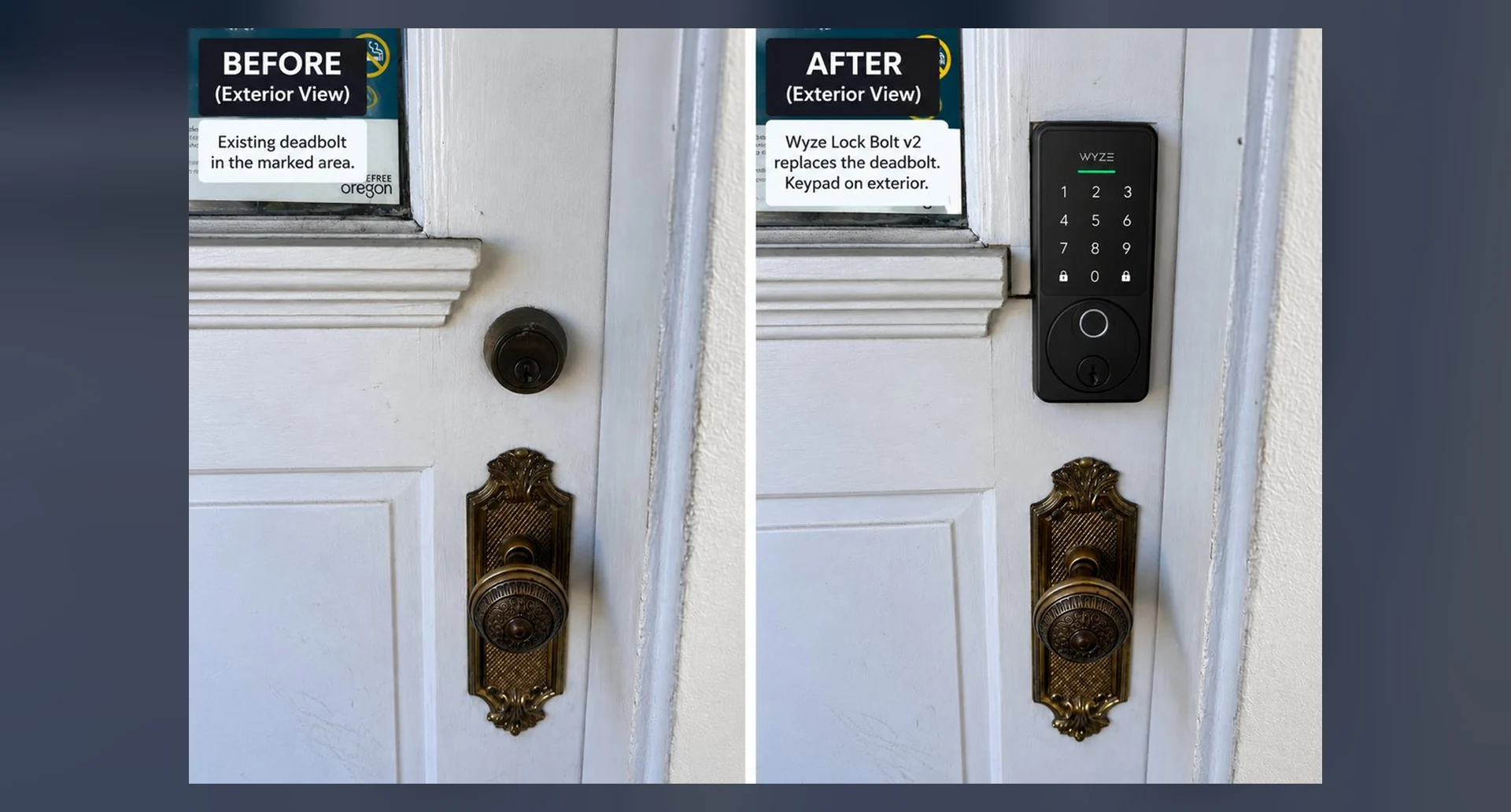
A keypad deadbolt on the main entry, scheduled to lock every night. Codes can be issued per tenant and switched off individually, without cutting a key.
Lit and on camera after dark
Floodlight cameras keep the grounds lit from dusk to dawn. Cameras in the existing porch light fittings and solar-powered cameras at the rear meant almost no new wiring.
A hand-off, not a handover
A guide written for the owners rather than for an installer: screenshots of their own app, a photo of every camera, the open decisions laid out as tick-boxes, and what to do when something goes offline.
Tenants told, not surprised
A short letter the owners could send tenants, saying plainly what the cameras record, who can see it, and what they do not do. It answered the privacy questions before they turned into complaints.
One example of the security and smart home work from my independent practice, which designs, installs, configures, hands off and supports systems for homes and small businesses around Oregon City. A multi-suite office building downtown had an after-hours problem: a main door that was not reliably locked and people on the property at night without permission. I fixed it fast and on a small-business budget with cameras covering the entrances and grounds, floodlights on from dusk to dawn, and a keypad deadbolt that locks itself every night, then handed it off with a plain-English owner’s guide and a letter for the tenants. The building and its owners are not named here; the photos are close-ups that do not identify the property.
The Problem
A multi-suite office building in downtown Oregon City had an after-hours problem. Tenants come and go at all hours, the main door was not reliably locked at the end of the day, and people were getting into the building and onto the property at night without permission. The owners wanted it solved quickly, without the cost of a commercial security contract, and without a system only an installer could operate.
The Solution
Designed and installed a system sized to the building rather than to a catalog. Every camera was visualized first: the design showed each one mocked into a photo of its exact spot, so the owners approved how it would look before a single hole was drilled. Cameras cover the entrances and the outside of the building, with floodlight cameras keeping the grounds lit from dusk to dawn and solar-powered cameras covering the rear without new wiring. A keypad deadbolt on the main entry locks itself every night, whoever leaves last. Then the part most installs skip: a plain-English owner’s guide, and a letter for the owners to send their tenants explaining what is recorded and who can see it.
Impact
- 1The main door is locked every night, regardless of who leaves last
- 2The outside of the building stays lit and recorded from dusk to dawn
- 3The owners run the system themselves, with a guide they can actually follow
- 4Maintenance and support continue after the hand-off
Key Decisions
- Show it before drilling: each camera was mocked into a photo of its real location during design, so placement and looks were agreed up front
- Cameras built into the existing porch light fittings: coverage at two doors with no new wiring, at the cost of keeping those switches on
- Floodlights on from dusk to dawn rather than motion-triggered, so the grounds read as lit and watched all night
- A lock that locks on a schedule instead of relying on the last person out
- Dropped a planned extra floodlight once the coverage showed it was not needed
- Wrote the guide for the owners, decisions first, instead of a technical as-built nobody reads
Lessons Learned
The system that stays switched on is the one the owner understands. The guide mattered as much as the hardware.
People deserve to hear about cameras before they notice them. A short letter heads off most of the worry.
Existing power and fittings decide the cost of an install more than the choice of camera does.
Screens
1 / 4